Why Poor Diets May Lead To Depression

Australian researchers said the consumption of poor diets  by young adults could result in moderate-to-high symptoms of depression.


According to the findings of a study of young adults published in the journal ‘PLOS ONE,’ those who embraced healthier food choices reported less anxiety and much better moods within weeks.


Study lead author, Heather Francis, said: “There is certainly evidence that eating a diet high in processed foods increases the risk of depression.” Francis is a lecturer in neuropsychology at Macquarie University in Sydney.


Explaining the link between poor diet and depression, Francis said, “Depression is associated with a chronic inflammatory response, and poor diet both increases systemic inflammation and is also a risk factor for depression.”

Depression, a major depressive disorder is a common and serious medical illness that negatively affects how you feel, the way you think and how you act. Depression causes feelings of sadness and/or a loss of interest in activities once enjoyed.

Lead author of the study, Sylvie Mrug, professor and chair of the psychology department, said adolescents’ emotion regulation was still developing and it was possible that diet and other environmental factors have a strong impact on their depression levels.


According to Mrug, “Food such as fruits, vegetables and yogurt contain low levels of sodium and high amounts of potassium and should be encouraged as part of a teen’s daily diet.”

Although the studies show a potentially positive impact of healthy eating on symptoms of depression, researchers urged caution.

“While diet may be able to improve outcomes, at this stage we would not recommend that it replace medication,” said Francis.

The study involved 76 university students between 17 and 35 years of age. All were reported to have eaten a diet heavy in processed foods, sugar and saturated fats, while also reporting feelings of sadness, decreased ability to feel pleasure and lack of motivation in the previous week.

The ‘NewsmaxHealth’ published that half of the participants were coached to add fruit, vegetables, fish and olive oil to their diet and reduce processed foods. The others received no coaching and continued their regular diets.

After three weeks, the researchers found that those who consistently ate better reported much better moods. Their scores on a scale measuring depression levels were normal and they reported less anxiety than the regular diet group, whose depression levels remained in the “moderate to high” range.

Why Men With Diabetes Should Avoid Scent Leaf

Several studies have shown that there is a rise in cases of diabetes globally with the attendant complications, including kidney damage, limb amputation, irreversible blindness, erectile dysfunction, hypertension to mention but a few.

Researchers have validated medicinal plants such as scent leaf (Ocimum basilicum), mistletoe (Viscum album), bitter leaf (Vernonia amygdalina), bitter kola (Garcinia kola), ginger and bitter gourd or melon (Mormodica charantia) for the treatment of type 2 diabetes and its related conditions.

But a new study has shown that men with diabetes should be cautious of taking herbal remedies for diabetes made with scent leaf, especially if they are already experiencing sexual upheavals such as decreased libido, impotence and infertility.

The new study titled “Ocimum gratissimum leaf extract may precipitate infertility in male diabetic Wistar rats” published in the journal JBRA Assisted Reproduction, suggested that men with diabetes should avoid herbal remedies that contain scent leaf.

The study involved Shittu S.T; Shittu S.A and Olatunji A.A at the Department of Physiology, College of Medicine, University of Ibadan (Nigeria), in collaboration with Oyeyemi W.A at the Department of Physiology, Igbinedion University, Okada, Edo State.

Commonly called scent leaf and basil, Ocimum basilicum is a shrub belonging to the family Lamiaceae. It is called Nchu-anwu in Igbo, Efinrin in Yoruba, Aramogbo in Edo and Daidoya in Hausa.

This study to investigate the effects of scent leaf on sperm quality and testes in alloxan-induced diabetic rats lasted for 28 days. Blood samples were obtained for tests as well as the epididymis and testes for sperm quality assessment.

They found that diabetes induces sperm impairments and distortions in the testis, which were aggravated by scent leaf extract in male Wistar rats.

Current pieces of evidence in normal rats and mice have documented that scent leaf may possess anti-fertility properties in a dose and duration-dependent manner.

Fasting blood glucose (FBG) was monitored at the start and at the end of the 28-day treatment. Fasting blood glucose level was significantly reduced after treatment.

Sperm count decreased significantly in scent leaf, diabetic untreated and diabetic treated rats when compared with the normal animals administered distilled water daily. The sperm count in the diabetic untreated group was significantly higher than the counts in the diabetic treated group.

The percentage of abnormal sperm was significantly increased in normal rats treated with scent leaf, diabetic untreated rats and diabetic rats treated with the scent leaf, when compared with the controls.

The researchers said that the decreased sperm count and increased percentage of abnormal sperm cells in all the scent leaf-treated animals of this study indicate that scent leaf poses anti-fertility effects on normal and diabetic rats.

According to them, “This is consistent with the report that aqueous extract of scent leaf has deleterious effects on both sperm production and maturation of sperm at different stages of its development.

“Nevertheless, impairment in these sperms parameters were also observed in the diabetic untreated group, it is more pronounced in the scent leaf-treated diabetic animals.

“It has debilitating effects on male fertility characterised by a reduction in sperm count, increased percentage of abnormal sperm and distortions in testes, which are worsened by diabetes mellitus. Thus, it is important to isolate the active hypoglycaemic component of scent leaf to harness its beneficial usage in diabetes mellitus.”

The global use of complementary and alternative medicine (CAM) for the management of diseases such as diabetes has rapidly increased over the last decade. It is reported that up to 72.8 per cent of people with diabetes used herbal medicine, dietary supplements and other CAM therapies.

A large number of medicinal plants are believed to possess anti-diabetic properties and have been utilised to manage diabetes and its related conditions.

In animal studies, researchers, for instance, highlighted the possibility of reduced side effects of antidiabetics (due to the lower dose required) when used in combination with ginger extract. In addition, ginger has been shown to be protective against kidney damage arising from the use of metformin.

Poisonous Tomato Paste In Nigerian Market - Customs Warns

The Nigeria Customs Service (NCS) has raised the alarm over the importation of expired and low quality tomato paste from Iran.

It warned that the expired product was injurious to health and mandated all concerned officers of the service to do all within their power to retrieve the product from circulation.

In a memo dated July 5, 2019 and tagged, “Re: Importation of expired Iranian Tomato paste”, obtained by Natural Health Daily yesterday, the Comptroller General of the service, Col. Hameed Ali (rtd) directed all Customs Area Comptrollers, head of the Federal Operations Units and head of units at all seaports, airports and land borders to be at alert.

The memo which was signed by the Deputy Comptroller General, Tariff and Trade, Isa Talatu, directed strict compliance by the service heads.

The memo reads, “It has been reported that six containers of expired and low quality Iranian tomato paste , SHIRIN ASAL MY TOMATO, with brix 20-22 instead of the recommended brix 27-29, has been imported into the country by M.T.V investment limited.

“Consumption of the paste is said to be harmful to human health. Consequently, all CACs are directed to  put appropriate mechanism in place to debar entry of the said paste and liaise with relevant agencies to forestall distribution and consumption.”

How Plantain Can Lift Your Mood

Emotions are a delicate phenomenon that can affect the whole livelihood, yet to control them is quite difficult. Many people have devised ways such as consumption of alcohol, hard drugs and foods like dark chocolate to help them control their emotions.

Experts have long known that dark bananas may help reduce fear and anxiety. Now, research suggests that consumption of plantain diet can also reduce fear and anxiety. It increases the level of brain serotonin which may have facilitated the calming, relaxing and mellowing serotonin circuits.

Serotonin is a neurotransmitter that helps to feel happier and calmer, which is why many antidepressants are designed to increase levels of serotonin in the brain.

To investigate the effect of consumption of unripe plantain on fear and anxiety behaviour, three groups of mice were fed with diet containing 100 per cent, 50 per cent and zero per cent (control) unripe plantain. The feedings lasted for 30 days before fear and anxiety behaviour was studied in these animals.

The light/dark transition box was used to assess anxiety and fear-related behaviours in the groups of mice.  This is a test that assesses unconditioned anxiety and exploratory behaviours. It is based on the perceived conflict in mice between exploring in a novel environment and avoidance of bright light.

A preliminary investigation of the concentration of serotonin in the brains of the mice using High Performance Liquid Chromatography shows that serotonin is significantly higher in the 100 per cent plantain diet group than control.

The 2018 study published in Tropical Journal of Natural Products Research involved Peter Erigbali at the Niger Delta University, Bayelsa State in collaboration with Eme Osim and Ofem Ofem from the University of Calabar.

Plantain is one of the over 40 species of the genus musa. This food crop is generally eaten cooked, fried, roasted ripe or unripe in contrast to the soft, sweet banana, which is of the same genus but eaten raw when ripe.

Plantain is affordable and readily available all year round in areas where it is cultivated. This staple diet in many countries of the world is rich in carbohydrates and fibre but lacks cholesterol. It contains vitamins A, B6, C and minerals; potassium, magnesium among others.

The parts of the plant has been used traditionally for their medicinal value in many ailments such as peptic ulcers, hypertension, diarrhoea, dysentery, and diabetes.

The science behind food’s effect on happiness is based on evidence that dietary changes can bring about changes in our brain chemistry – altering the hormones responsible for controlling our mood. This is where the so-called happiness hormone, serotonin, comes into play.

In the study, the researchers said that this staple food can provide nourishment as well as contribute to the management of emotional problems, with fewer side effects than drugs.

For instance, there was less occurrence of depression in a research population that consumed Omega-3 fat. The alterations of brain chemistry led to a more balanced, clear and a joyful mental state that is associated with a varied, nutrient dense diet.

A 2015 study found fermented foods including yoghurt and fermented soy products reduced social anxiety in some young people, while multiple studies found consuming healthful bacteria increased happiness in some people.

Green tea contains an amino acid called theanine, which is receiving increasing scrutiny due to its potential effects on mood disorders. Theanine has anti-anxiety and calming effects and may increase the production of serotonin and dopamine.

A 2017 review found that 200 mg of theanine improved self-reported relaxation and calmness while reducing tension in human trials.

Conversely, foods that interfere with its production – such as junk food and alcohol – can increase levels of anxiety and depression. This explains the finding of a survey by the Food and Mood project that changing their diet significantly improved the mental health in nearly 90 per cent of people who took part in the study.

Many people have explored various methods such as music, yoga, exercise and religion all of which are believed to affect the emotional state in one way or the other.

According to one study, some music cause positive emotion like happiness, some cause negative emotion like sadness and fear, but loud music could cause deafness.

Like herbal teas, many herbal supplements claim to reduce anxiety. However, little scientific evidence supports these claims. It is vital to work with a doctor who is knowledgeable about herbal supplements and their potential interactions with other drugs.

Camel Milk Could Be Helpful In Asthma Treatment

Asthma is one of the most problematic diseases that affect both adults and children with diverse symptoms. Many things can trigger an attack in asthmatics.

Of particular note are inhalations of dust, especially when sweeping an enclosure, of smoke from frying or the burning of grass.

The symptoms of persons with asthma differ greatly in frequency and degree. Some have a mild cough and wheezing much of the time, punctuated by severely increased breathlessness following exposure to known allergens, viral infections, exercise, or non-specific irritants.

This study, which lends credence to the ethnomedicinal use of the leaves in asthma and cough, had evaluated its effect on coughing in guinea pigs and mice respectively. It also assessed for toxicity.

The doses of 200 mg/kg and 400 mg/kg significantly reduced the cough bouts by two-fold and three folds respectively when compared to the control (distilled water).

Its cough  calming effect at 400 mg/kg was higher than that achieved with the standard drug, dihydrocodeine.

The researchers said that Napoleona vogelii contain substances that have a bronchodilatory effect which helps to reduce the volume of mucus that may plug the airways in persons with asthma.

The 2019 study, published in the journal, Biomedicine & Pharmacotherapy involved Adesola A. Adejayan, Raymond I. Ozolua, Dickson O. Uwaya and Gerald I. Eze at the University of Benin in collaboration with Adaobi C. Ezike at the University of Nigeria, Nsukka.

Cough is also, a respiratory disease that is caused by different factors, which sometimes co-exist with asthma. About 40 per cent of the persons with asthma reports cough. Oftentimes, drugs that help control cough re useful in asthma.

Napoleona vogelii is used in making wooden poles, wraps, chewing sticks and mats. The leaves are widely used in South-Eastern Nigeria for the treatment of stomach aches, diarrhoea and treatment of cough and asthma. Traditional healers often dry the leaves under the shade and prepare the extracts in alcohol.

Napoleona vogelii is called annum (Kanuri), ayin or orin-odan ainy (Yoruba), atara (Igbo) and kukunchi.

Previously, experts’ assessment of studies on the effectiveness of camel milk in lung inflammatory diseases said that camel milk could be helpful in the complementary treatment of asthma.

In the 2018 edition of Traditional Medicine Research, they had assessed all past studies on the effect of camel milk in lung inflammatory diseases.

According to them, “On the one hand, cow milk could lead to the occurrence of asthma. On the other hand, camel milk could be used to treat asthma via its effects of immunoregulation, antiinflammation and anti-oxygenation.”

Due to the natural nature of camel milk and its properties, and based on traditional properties of camel milk, it seems to be effective in asthma treatment, although this claim needs more extensive clinical studies in this field.

According to Persian medicine, the camel milk can remove the sticky phlegm in the respiratory airways prevent harmful substances from entering into the lungs and improve the airways stenosis.

Camel milk has some differences compared to other mammal’s milk. It contains low cholesterol and sugar and many minerals such as potassium, sodium, iron, copper, zinc and magnesium, as well as high levels of vitamin C, on the other hand, it has natural antioxidants.

Traditionally, this milk also could increase appetite and sexual desire. It was nutritious and had positive effects on skin beauty, teeth growth facilitating, maintaining the health of the elderly individuals, improving the liver and eye vision weakness and haemorrhoids.

Nonetheless, drinking camel milk may have complications like diarrhoea, and constipation.

Why African Locust Beans Prevent Complications Of Diabetes

Despite the progress made in the treatment of diabetes, several challenges are still encountered. These include the side effects associated with these medications, the high cost of most of these drugs and their activities which address the symptoms of diabetes rather than the underlying causes.

Now, experts say that African locust beans (Parkia biglobosa) are effective for mitigating complications of diabetes in organs of the body such as the liver, kidneys and pancreas.

Poorly controlled diabetes could cause damage to the large blood vessels of the heart, brain and legs (macrovascular complications) and damage to the small blood vessels, causing problems in the eyes, kidneys, feet and nerves (microvascular complications).

Diabetes mellitus is a major threat to global public health that affects three per cent of the population worldwide. Effective management of the disease is based on the use of agents that possess blood glucose-lowering properties.

African locust bean is commonly consumed in the diet of individuals in parts of Nigeria. It is known as dawadawa (Hausa), ogiri (Igbo) and Iru (Yoruba) in some Nigerian languages.

The Igbo and Yoruba people use it in their traditional systems to treat different illnesses or diseases. Various parts of its plant are used for this purpose including the seeds, leaves and bark.

The seeds, either in their unprocessed or fermented form, are soaked in water or left overnight to allow for extraction by maceration. The next morning this is filtered and the extract consumed to treat diabetes mellitus.

African locust bean plant is also used in folkloric medicine in the treatment of leprosy, hypertension, wound healing, bacterial infections and diarrhoea.

In determining African locust beans’ efficacy in mitigating diabetic complications, researchers at the Univerisity of Benin fed its water extract to rats and checked for toxicity. They also used different concentrations for treated diabetic rats. It was in the 2019 edition of the Journal of Ethnopharmacology.

After two weeks of treatment, the animals were sacrificed and their blood samples as well as internal organs (liver, kidneys and pancreas) collected for assessment.

The acute toxicity study revealed no death when water extract of African locust bean was administered even at doses as high as 5000/ mg/kg. No death was reported over the two-week observation period.

The various doses of this extract caused a significant increase in red blood cell count and haemoglobin levels in comparison to the diabetic control. These are diabetic rats that received only distilled water.

Weight loss is a common feature seen in diabetes mellitus due to the degradation of structural proteins and muscle wasting. Diabetic rats treated with the various doses of African locust bean aqueous extract had weights which were not significantly different from the normal control.

Also, the extract at various doses slowed liver and kidney deterioration in these streptozotocin-induced diabetic rats. The pancreas of the Africa locust bean treated groups revealed various degrees of improvement.

From this study, African locust bean extract at 400 mg/kg dose showed the best efficacy in ameliorating complications of diabetes in organs of the body such as the liver, kidneys and pancreas.

They declared: “These observations show that Parkia biglobosa helps to prevent complications of diabetes hence, could be recommended as a part of the diet of diabetic patients.”

However, they said more drug interaction studies should be carried out to determine if harmful drug interactions between antidiabetic medications and African locust beans exist.

Previously, many researchers had corroborated the blood sugar and cholesterol effects of the fermented seeds of African locust beans. Also, some showed that it contains a protein that is protective against the damages caused by diabetes on testes of rats.

Local research has shown that locust bean helps to promote good sight and drives away hypertension and disease conditions like stroke and diabetes.

In another result published in Science Journal based in Dakar, Senegal, researchers tried out locust beans on rats to find out whether it actually has any impact on controlling blood pressure and the result obtained showed that adequate doses of locust beans helped to decrease arterial blood pressure.

A number of clinical studies have been carried out in recent years that show plant-based therapies that have anti-diabetic properties to include Aloe vera, bitter melon, ginger and okra.

One review, published in 2013 suggested that aloe vera might help protect and repair the beta cells in the pancreas that produce insulin.

Similarly, in 2015, a review suggested that ginger lowered blood sugar levels, but did not lower blood insulin levels, suggesting that ginger may reduce insulin resistance in the body for type 2 diabetes.

Taking Vacation Cuts Heart Disease Risk

Relaxation and other forms of vacations have long been known to boost health. Now, researchers in the United States (US) have discovered that the more vacations a person takes over a year, the less likely the fellow would develop metabolic syndrome.

The research was carried out by Syracuse University in New York, similarly found that for every holiday a person takes, the person’s risk of metabolic syndrome goes down by a quarter.

These are the findings of a new study published in the journal ‘Psychology & Health journal’. Corroborating this development, the lead author of the study, Dr. Bryce Hruska, who is assistant professor in the Falk College Department of Public Health in the US, said: “What we found is people who vacation more frequently in the past 12 months have a lowered risk for metabolic syndrome and metabolic symptoms.”

Metabolic syndrome is a cluster of conditions that occur together, increasing the risk of an individual to heart disease, stroke and type 2 diabetes.

These conditions include increased blood pressure, high blood sugar, excess body fat around the waist, and abnormal cholesterol or triglyceride levels.

Triglycerides are the main constituents of body fat in humans and other vertebrates. A simple blood test can reveal whether your triglycerides fall into a healthy range: Normal — Less than 150 milligrams per deciliter (mg/dL), or less than 1.7 millimoles per liter (mmol/L) Borderline high — 150 to 199 mg/dL (1.8 to 2.2 mmol/L) High — 200 to 499 mg/dL (2.3 to 5.6 mmol). According to Hruska, metabolic syndrome is a collection of risk factors for cardiovascular disease. If a person has more of them, the fellow is at higher risk of cardiovascular disease.

Reacting to the development, Hruska said, “The current study was important because we are actually seeing a reduction in the risk for cardiovascular disease the more vacationing a person does. “Because metabolic symptoms are modifiable, it means they can change or be eliminated.”

Metabolic syndrome is made up of high blood pressure, cholesterol and blood sugar levels, as well as excessive fat around the waist. However, he affirmed that metabolic syndrome could be prevented or reversed by losing weight, exercising often and quitting smoking. But, how ‘time off’ affects our risk was less well known.

To get to the root of this, the researchers analysed 63 workers, who were eligible for paid holidays. The employees gave blood samples and had their waist circumferences measured.

Metabolic syndrome was ‘diagnosed’ if the participants had three or more of the following: Waist circumference of more than 35inches (88cm) in females or 40inches (101cm) in males; blood pressure over 130/85mmHg. A normal reading is considered less than 120/80 mmHg; triglycerides (fat in the blood) of more than 150mg/dL; good cholesterol level of less than 50mg/dL in females or 40mg/dL in males. Less than 40 mg/dL is considered a major risk factor for heart disease.

There Is No Ebola Case In Nigeria - FG Assures

The Federal Government has called on Nigerians to disregard rumour of a positive case of Ebola Virus Disease in the country, saying that effort had been heightened at the various ports of entry into the country to ensure that sick people making coming into Nigeria were properly screened.

Democratic Republic of Congo and Uganda have witnessed a resurgence of the virus in their countries lately, with Ugandan Ministry of Health announcing on June 11, 2019 the first cross-border cases in the current outbreak.
 
In a statement signed by the Director, Media and Public Relations, Federal Ministry of Health, Boade Akinola, the Permanent Secretary at the ministry, Abdullaziz Abdullahi, stated that in line with the World Health Organisation guidelines, a recent risk assessment conducted by the Nigeria Ebola Preparedness team indicated that the overall risk of importation of Ebola virus to Nigeria from Democratic Republic of Congo and Uganda was low.

He also described as false, an alleged message circulating in the social media purporting a positive case of Ebola Virus Disease in the country.

The Permanent Secretary also called on members of the public to discourage the circulation of any unverified information, which he said, could cause harm to innocent people and unnecessary panic among the citizens.

Abdullahi said, “FG (has) assured (citizens) that since the reports of outbreak of EVD in the Democratic Republic of Congo, heightened surveillance had been on-going at the various points of entry by officials of the Port Health Services division of the ministry to prevent importation into Nigeria. To this effect, every sick passenger has been properly screened and I can say categorically that none of the patients screened has tested positive for Ebola or any deadly disease.

“In line with WHO’s guidelines, a recent preliminary risk assessment conducted by the Nigeria Ebola Preparedness team, coordinated by the Nigeria Centre for Disease Control indicated that the overall risk of importation of EVD to Nigeria from Democratic Republic of Congo and Uganda is low, but we are not resting on our oars in view of trading activities of Nigerians.

“The Nigerian government remain fully committed while working closely with the WHO, state ministries of health, partners and all other stakeholders, to protect the health of all Nigerians. However, necessary protocols are being followed in line with international Health Regulations.”

Rising Suicide Cases In Nigeria: NAFDAC Bans Production Of Smaller Packs Of Sniper, Other Chemicals

In a bid to control suicide cases in Nigeria, the National Agency for Food and Drug Administration and Control (NAFDAC), Thursday banned the production of smaller packs of Sniper and other harmful agro-chemicals. 

Disclosing this on Thursday, Dr Husman Bukar, the Director, Veterinary Medicine and Allied Products Directorate, NAFDAC, opined that the products is dangerous to the applicators and the environment they are applied. 

He announced stricter measures to curtail the use of Sniper (Dichlorvos or 2,2-dichlorovinyl dimethyl phosphate) in homes to end the abuse of the pesticide which in recent times has been associated with suicides in Nigeria. 

His words, “Recently, some suicide cases have been associated with people drinking Sniper, henceforth, we call on the agro-chemical industry to enhance their distribution channels so that this product (Sniper) gets to only accredited distributors and marketers.

“We have also placed a ban on the manufacture of smaller packs of Sniper which are easily purchased for household use. “On the use of glyphosate by farmers, NAFDAC has placed a ban on glyphosate-based formulations with tallow-amine (an emulsifier and wetting agent for agrochemical formulations. 

Criminal laws: Our challenges are peculiar, requires a shift – Adeniji Kazeem(Opens in a new browser tab) “Agrochemical companies have been given the grace period of between now and December 2019 to withdraw all glyphosate formulations with tallow-amine from the Nigerian market,” he said. 

Also speaking, Mr Shanni Srivastava, the UPL Country Manager, said his company was working towards ensuring that only safer and environmentally friendly herbicides are introduced in the Nigerian market for the benefit of farmers. 

He said the debut of Lifeline was to offer a better and safer alternative to paraquat which in several countries in Africa had been banned.”

Why Shea Butter Soothes Aching Knees

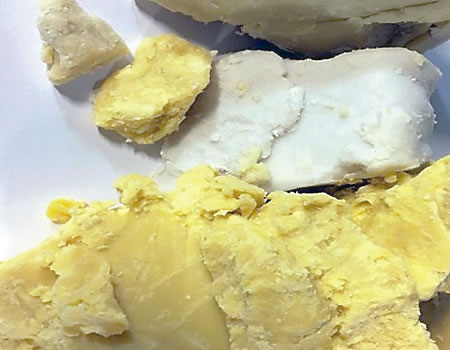
Shea butter is not only great for the skin; it is a great remedy for an aching knee. It significantly relieves the joint pain, stiffness and reduced mobility associated with knee osteoarthritis.

In a clinical trial of shea butter in 34 persons with osteoarthritis, researchers found it caused an improvement in functionality of the knees by 30 per cent after 16 weeks of its application. Also, there was a significant reduction in the level of pain and stiffness experienced.

These were volunteers recruited from the outpatient department of the Physical Medicine and Rehabilitation Department, China Medical University Hospital, Taichung, Taiwan.

Osteoarthritis, the most common form of arthritis, is the leading cause of chronic disability. It most commonly affects the knee and has an impact on the health-related quality of life of the elderly. Its symptoms may include joint pain, tenderness over the inside of knee, stiffness, locking, reduced mobility, atrophy of lower extremities, and decreased walking speed.

A lot of arthritis sufferers very often turn to natural herbal remedies and botanical methods to gain release from their symptoms. Remedies that have shown some promise in helping to treat the symptoms of arthritis include shea butter.

The researchers, in the 2013 study published in the journal, Evidence-Based Complementary and Alternative Medicine, stated that the observed relief in symptom and improved muscle control was consistent with past findings on the analgesic effect of the shea nut oil extract.

That the symptoms and muscle functions are improved significantly after 16-week intervention butter, they linked to shea butter constituents causing a reduction in the inflammatory effects of osteoarthritis.

The inflammatory process which is associated with arthritis occurs in response to a range of injuries from sunburn and wounds, to infection and auto-immune conditions. It is characterised by four physical signs; warmth, redness, swelling, and pain.

However, that improvement in symptoms did not immediately manifest in the activities of daily living; they stated was perhaps due to individuals habitual compensative strategies to cope with pain.

“Although improved muscle function was observed, including greater control and an increase in muscle strength to achieve a functional goal, the subjective feeling of improvement in the activities of daily living was not significant.

“The findings have proven the efficacy of shea nut oil extract as a complementary option to improve the symptoms and function in relation to knee osteoarthritis,” they declared.

The soothing properties of shea butter, commonly referred to as Ori in Yoruba, are well known on the African subcontinent where it grows in its Savannah belt.

 It had anecdotally been used to help alleviate symptoms of arthritis and rheumatism when it is rubbed on the aching joint but its mechanism has not been clear. Also, laboratory studies have shown that the shea butter extract has properties that should make it an effective agent to treat arthritis.

There are many remedies that have shown some promise in helping to treat the symptoms of arthritis. For instance, a survey of anti-arthritic remedies used in Igbo tribal ethnomedicine in Nigeria named three plants. These are Lonchocarpus cyanescens, Costus afar and Terminalia ivorensis.

Clinical investigations on these herbs, according to a report in the 1982 edition of the Journal of Ethnopharmacology revealed that extracts of these herbs reduced inflammation and the associated swelling, checked diarrhoea, and ameliorated all signs associated with arthritis in rats.

 Lonchocarpus cyanescens is known as ‘elu’ in Yoruba, ‘anunu’ in Ibo, ‘talaki’ in Hausa, ‘suru’ in Tiv and ‘ebelu’ in Edo languages of Nigeria. Costus afar is commonly referred to as ginger lily/bush cane while Terminalia ivorensis is commonly called idigbo, black afara, framire or emeri.

Ginger is very effective in the treatment of arthritis and a host of other ailments. Recent medical research in Holland has indicated that this, too, is much more than just myth. Eating ginger does, according to the Dutch doctors, help alleviate arthritis pain.

In one study, Indian researchers gave three to seven grammes of ginger a day to 18 people with osteoarthritis and 28 with rheumatoid arthritis. More than 75 per cent of those participating in the study reported at least some relief from pain and swelling. Even after more than two years of taking these high doses of ginger, none of the people reported side effects.