Rape In IDPs Camps: Soldiers, Police Officerws, Air Force Officer, others arrested

As the quality of life continues to deteriorate amongst internally displaced persons (IDPs) in the north-east part of Nigeria, revelations coming up from the camps show that uniformed officers sent to protect them are actually the ones spare heading the orgy of sexual assaults against female IDPs. For allegedly raping Internally Displaced Persons, three soldiers, two policemen and a prison official have been arrested.
Arrested alongside the soldiers and policemen for the same offence were one prison official, a member of staff, Borno Ministry of Agriculture and two members of the Civilian Joint Task Force, Borno State.
The officials were accused of involving in sexual exploitation and abuse of IDPs in the North-East.
The Inspector-General of Police, Ibrahim Idris, disclosed this yesterday, in Abuja, adding that if indicted the policemen and other security operatives involved in the alleged crime would be dismissed and prosecuted after investigation.
A Non-Governmental Organisation, Human Rights Watch, had in its report accused camp officials, vigilance groups, soldiers and policemen of engaging in sexual harassment of women and teenagers in IDP camps in Borno, Yobe and Adamawa states.
A few of the victims told Human Rights Watch that they were drugged and raped while 37 were coerced into sex through false marriage promises, material and financial assistance.
Shocked by the allegations, President Muhammadu Buhari directed the IG and the state governments to carry out a thorough investigation into the alleged incidents.
But responding to questions shortly before the commencement of his monthly conference with senior police officers in Abuja, the IG said the police would liaise with the Army and the Air Force to make their indicted officials available for interrogation.
He said, “From the findings so far, we have succeeded in our investigation. A number of suspects have been arrested and they include two policemen, three army officers, one prison official; one Air Force officer, an employee of the Borno State Ministry of Agriculture and two members of the Civilian JTF.”
Idris stated that the force had put in mechanisms, including the deployment of female police officers to IDP camps in order to check recurrence.

Nigerian Customs Intercept Yam Porridge, Jollof-Rice And Egusi Soup Imported From India


Despite repeated warnings by health officials on the dangers posed by imported preserved ready-to-eat foods, Nigerian importers have continued to pay deaf ears to the warnings.The Tin-Can Island Command of the Nigeria Customs Service (NCS) has intercepted a 20ft container of “READY TO EAT FOODS’’ like Egusi Soup, Jollof Rice, Ogbono, Yam Porridge imported from India. The Customs Area Controller, Comptroller Bashar Yusuf, disclosed this in a statement made available to newsmen on Monday in Lagos by the Public Relations Officer of the Command, Mr Uche Ejesieme. 
Yusuf spoke with stakeholders at the SDV/SCOA Terminal while handing over the container of imported prepared foods to officials of the National Agency for Food and Drug Administration and Control (NAFDAC). The controller described the scenario as an “aberration”, considering the fact that government granted zero duty for the importation of machinery for the packaging of agricultural products. 
“Why should indigenous menu be imported into the country at a time when investors are much sought after to boost local industries?’’ the News Agency of Nigeria (NAN) quotes Yusuf as saying. The controller told the officers to see training and re-training as a veritable tools that would sharpen their knowledge toward achieving desired results. He appreciated the Comptroller-General of Customs, Retired Col. Hameed Ali, for effectively re-positioning the service in spite of global recession. 
Many People have continued to wonder why local delicacies like yam porridge, egusi and jollof-rice should be reported into the country. Some even went further to say that India does not grow yam or melon - so how did they manage to get the raw food materials used in making those delicacies? 
In answering that question, an exporter in Apapa who pleaded anonymity, told Nigeria Natural Health Online that it is the hand work of some dubious exporters in the country.
" They export the raw food stuff to Asian countries where they make them into ready-to-eat foods which are then imported back into the country to be sold at very exorbitant prices," he told our reporter.
These foods which are laced with preservatives, according to health officials, are not save for the body. Unfortunately, most elite who live in high bro areas in Nigerian cities, tend to patronize these imported foods, preferring them to the one cooked in local restaurants.
Preservatives are chemicals used to keep food fresh. Although there are a number of different types of food preservatives, antimicrobials, antioxidants, and products that slow the natural ripening process are some of the most common. Despite their important function, preservatives can pose a number of serious health risks.
Some of the health hazard associated with preservatives include: increased risk of cancer, hyperactivity in children and reduced heart health.

Starvation In Nigerian IDPs: Buhari Battles Foreign Agencies

Against the backdrop of media report of hunger and starvation in IDPs camps in northern Nigeria, the Presidency has accused some aid agencies providing some humanitarian assistance to Internally Displaced Persons (IDPs) in the North East, of raising false alarm about mass starvation in the camps.
The Presidency said though it appreciates the increasing humanitarian assistance from the aid agencies which are  complementary to the efforts of the federal and state governments in the North East, a region it acknowledges is in the middle of a humanitarian crisis, it will not tolerate any hype meant only to attract funds rather than proffer solutions.
It described the reports as uncharitable and unnecessary attempts to portray the government as doing nothing even as hundreds of people of even a million are at the risk of dying.
President Muhammadu Buhari’s Senior Special Assistant on Media and Publicity, Mallam Garba Shehu, in a statement said the Presidency is particularly unhappy with one of the United Nations (UN)agencies which raised the alarm that 100,000 people will die of starvation in 2017.
“We are concerned about blatant attempts to whip up a non-existent fear of mass starvation by some aid agencies, a type of hype that does not provide solution to the situation on the ground but more to do with calculations for operations financing locally and abroad.
“There can be no doubt that the effect of the Boko Haram terrorism and their occupation of communities and destruction of houses, infrastructure and means of livelihood has been manifested in the decline of socio-economic activities throughout the North-East.
“Arising from this, farming, pastoralism, trade, exchange of goods and services and social interaction among the people have negatively been impacted leading to the displacement of more than two million people, mostly women and children.
“Consequently, there is death, there is hunger and there is poor nutrition.
“The displacement pattern, as revealed by the National Emergency Management Agency (NEMA) with the International Organization for Migration (IOM) indicates that there are currently about two million people who are displaced.
“Only about 20 per cent of this is however in IDP camps.
This much reduced numbers are in Borno in 13 formal and 16 satellite camps; four of such camps currently operating in Adamawa and about the same number in Yobe.
“The larger number of the IDP population is living either in self-settled camps or with host communities" the statement said.
It will be recalled that a couple of weeks ago, Nigerian Natural Health Online authoritatively reported the UN's damning verdict in which it stated that the lives of children in the northern part of Nigeria are currently hanging in the balance as the organization, warned that  75,000 children risk dying in "a few months" as hunger grips the country's ravaged north-east in the wake of the Boko Haram insurgency.
Boko Haram jihadists have laid waste to the impoverished region since taking up arms against the government in 2009, displacing millions and disrupting farming and trade.
Nigeria's president, Muhammadu Buhari, has reclaimed territory from the Islamists but the insurgency has taken a brutal toll, with more than 20,000 people dead, 2.6 million displaced, and famine taking root.
UN humanitarian coordinator Peter Lundberg said the crisis was unfolding at "high speed".
"Our assessment is that 14 million people are identified as in need of humanitarian assistance" by 2017, Lundberg said in the Nigerian capital, Abuja.
Of these, 400,000 children are in critical need of assistance, while 75,000 could die "in the few months ahead of us", Lundberg said.

One Pint Of Beer A Day Raises Risk Of Prostate Cancer

Drinking just one pint of beer every day raises the risk of contracting prostate cancer by 23 per cent, a study has found.
It means that when it comes to cancer, there is no safe threshold for drinking, researchers warned.
Only binge-drinking was thought to raise the risk of contracting the disease – the most common cancer for men.
But this misconception was based on flawed studies that gave men a false sense of security, the new analysis shows.
Research by the Centre for Addictions Research of BC at the University of Victoria in Canada and Australia's National Drug Research Institute at Curtin University analysed 26 previous scientific studies that linked the consumption of alcohol to prostate cancer.
They found that men who drank two to three units each day – equivalent to one pint of 5 per cent strength beer or two 175ml glasses of wine – raised their risk of prostate cancer by 23 per cent compared to people who had never drunk alcohol.
But even as little as half a pint a week increased the likelihood of contracting the cancer, which is a huge health problem for the NHS.
Some 47,000 British men are diagnosed with the disease each year, and 11,000 die.
The research is likely to alarm men who considered themselves moderate drinkers and therefore not in danger.
Lead researcher Tim Stockwell said: 'For cancer risk, the causal processes appear to be operating whenever we drink, and to a degree directly relate to how much we consume and with no safe threshold.' The risk was underestimated for years because many previous studies put former drinkers in the same category as teetotallers.
This created a false impression, because many former drinkers stop or cut down boozing as they age and their health declines.
As a result, the reference group of non-drinkers was unhealthier than it would have been if it only included teetotallers. So when compared with the drinkers' group, the risk from consuming alcohol appeared to be lower than it actually was.
The authors said misclassifying former drinkers as so-called abstainers 'disguised a significant association between alcohol exposure and risk of prostate cancer'. 
The way in which alcohol triggers the growth of tumours in the prostate is not fully understood. Alcoholic drinks contain carcinogens including acetaldehyde – nicknamed 'the hangover chemical' – which is formed when alcohol is broken down in the liver, and can damage cell DNA.
Dr Stockwell added: 'This study contributes to the strengthening evidence that alcohol is a risk factor for prostate cancer. Consumption will need to be factored in to future estimates of the global burden of disease.'
Co-author Dr Tanya Chikritzhs said the study – published in the journal BMC Cancer – meant previous research showing alcohol had a protective effect on health should be 'treated with caution'.
But Dr Jasmine Just, from Cancer Research UK, said: 'Alcohol has been linked to several types of cancer, including breast and bowel cancer – but it's not as clear whether alcohol increases the risk of prostate cancer.
'This study suggests there's a link between alcohol and prostate cancer, and takes into account factors that might have made this link less obvious in previous research.
'But it's too early to say for sure whether alcohol increases the risk of prostate cancer.'
However, she added: 'Alcohol causes thousands of cancers each year, so cutting down how much you drink is a good way to reduce cancer risk.'  

Nigerian HIV/AIDS Patients Lament High Treatment Fees

These are hard times for people living with HIV/AIDS in the country.
Besides the high user fees that they are allegedly charged, the patients are lamenting the rising cases of treatment failure. Nigeria may soon witness a higher rate of deaths from the ailment if nothing is done urgently to address the situation.
Ahead of the World AIDS Day today, it was gathered that many hospitals are still charging many of the people living with HIV in Nigeria fees, sometimes as high as N7000 for monitoring tests. Chemistry and Haematology (essential laboratory) tests for PLHIV which were hitherto free in the country are now being paid for.
It was reported earlier this year reported that the United States government that had largely supported the HIV/AIDS scheme in the areas of chemistry tests and antiretroviral drugs (ARV) for the affected people through the President’s Emergency Programme for AIDS Relief (PEPFAR) had officially withdrawn a substantial amount of the support.
The 2015 target for HIV treatment coverage for adults and children was not achieved while the quality of HIV services provided has also remained worrisome. “Also, we do not measure the management of HIV co-infections. Yet we are aware that in Nigeria, co-infection of HIV with tuberculosis, hepatitis and cancers are very high,” a stakeholder said.
To address the situation, stakeholders urged the Federal Ministry of Health to institute a mechanism to ensure all hospitals providing HIV treatment services, no matter the status, adhere to prescribed standards of practice.
They also want the government to remove the barriers to accessing HIV treatment.
The Executive Secretary of the Civil Society for HIV and AIDS in Nigeria (CiSHAN), Walter Ugwuocha said:
“As the HIV treatment programme matures, it is important that we equally look for ways to ensure the cost of programme implementation drops. One of these ways is shifting to the use of cheaper and less toxic first-line drugs. It is also important we consider generic drug production. We must recognise the value in the use of self-test kits as a tool that can help reduce the barriers to individuals determining their HIV status,” he said.
Ugwuocha also wants the national HIV treatment programme to be weaned off donor support. “The HIV treatment programme in Nigeria is heavily dependent on the support of international partners. We demand that the national government’s investment in the HIV treatment programme should increase by at least 100% by the end of 2018. One such approach is the institution of the AIDS trust fund,” he told the media.
The Resident Coordinator of the Joint United Nations Programme on HIV/ AIDS (UNAIDS), Dr. Bilali Camara urged the inclusion of HIV/ AIDS testing and treatment in the National Health Insurance Scheme (NHIS).

Bitters Can Help Boost Immune System

Medical experts in Yenagoa, Bayelsa, have said that bitters could boost the immune system and regulate stomach acidity.
However, the experts advised manufactures to improve on the hygienic of production of such drugs and herbs.
A News Agency of Nigeria (NAN) correspondent who visited some shops yesterday in Yenagoa gathered that bitters were selling and consumed in most public places of drinking in the city.
Some of them include Action Bitter, washing and setting, baby-Oku, Skerewu, man-power, Swedish, Yoyo, Iguedo’s Gogo Cleanser as well as Chinese and India bitters.
Dr Luck Onuegbu, a gynaecologist in Ovom Community Health Centre, Yenagoa Local Government Area of Bayelsa, said that intake of bitter has nutritional value and it could also enhance fertility.
“Bitters are good to human body but we must be careful of what are being sold in the market this days; I know some bitters like Swedish and Yoyo, but with the influx of the unbranded ones today is worrisome.
“There are too many of them in the market but I can still remember Iguedo’s Gogo Cleanser and Yoyo bitters, they are good to human body.
“The mixture can regulate stomach acidity and manage blood sugar; it can also enhance fertility as well as combating inexplicable infertility in both man and woman.
“There is need to improve hygiene for production across the country and I must urge consumers to be using those that have been approved by the NAFDAC,” Onuegbu said.
Mrs Margret Owei, a Nutritionist, said that bitters or aromatic could also aid digestion, reduce digestive discomfort and actually improve the daily function of the digestive system.
According to Ogene, the herbal mixtures help to feed the micro-bacteria that becomes healthy intestinal flora and taking after a meal is actually a little better but can also be taken before a meal.
Mr Ken Omeka-agu, a consumer of bitters, said it had helped his body system to be functional and agile.
Omeka-agu said that he was not consuming the mixture because they were cheap, but because it was African’s herb that had been used by our fore-fathers.
“You cannot take roots, especially `Agbo’, out of the system because it has been in use by our fore-fathers for ages that is why they lived long and strong.
“Most white man’s medication is made from herbs, so what is the big deal about herbs, or Agbo? Bitters, especially Agbo can cure a lot of illness, we want the state and federal governments to promote the use of African’s root,” he said.
Mrs Mercy Olufemi, an Agbo seller, said that some other bitters were Alomo and Kasapreko (from Republic of Ghana), Ibile, Opa Eyin and man power.
Olufemi said that these bitters were very suggestive for libidinal efficacy for both man and woman.
“There are different kinds of bitters that can improve libido and help a man to be active with his spouse; bitters or bitter tonic are spirit-based tinctures made from herbs, barks and roots.
“Bitters are prepared according to secret recipes by several manufacturers using bitter herbs, leaves, fruits, seeds or roots and sometimes alcohol or sugar.
“Yes, we sell it, Agbo in measures, a cup can be sold between N20, N50 and N100 depending on the mixtures and ailment,” she said.

Consumption of tiger nuts can prevent heart attack, constipation, diabetes – Expert nutritionist

A nutritional biochemist, Dr Ochuko Erukainure, last week Thursday said consumption of tiger nuts could prevent and help in the management of heart attack, constipation and diabetes.
Erukainure, a Senior Research Officer at the Federal Institute of Industrial Research (FIIRO), Oshodi, Lagos, said in an interview with the News Agency of Nigeria (NAN) in Lagos that the nuts contain high fibre.
He said that tiger nuts fibre helps the body by providing simple relief of constipation and also keeps the eater fuller longer and aids in weight loss.
Erukainure said that the fibre content was higher than other suggested sources of fibre such as oat bran, rice bran, peaches, cabbage, pears, apple, carrot and chia seeds.
Tiger nuts are not actually a nut, but a small tuber, which is high in fibre, protein and natural sugars.
Tiger nuts are very healthy which can help to prevent thrombosis and activate blood circulation and its very high fibre content combined with a delicious taste, make them ideal for healthy eating.
“Tiger nuts give a heating and drying action to the digestive system in general and this gives it the potency to alleviate flatulence,” he said.
According to him, tiger nuts are also high in calcium which is a bone building and growth supporting mineral.
He said that with only 100 grammes of tiger nuts, the body would get 13 to 17 per cent of daily recommended dose of magnesium.
“This mineral stays active in the body and participates in more than 300 biochemical reactions of our chemical.
“Tiger nuts are high in amino acids with arginine, while arginine has shown to aid in conditions that are caused or made worse by restricted blood vessels such as chest pain and erectile dysfunction.
“Tiger nuts are also rich in vitamin E and protect the eater from harmful free radicals which are responsible for the death of the body cells.
“Antioxidants help the body to protect itself from free radicals, molecules that have an unshared electron.
“The unshared electron can react with oxygen to form reactive oxygen species, which are damaging to our bodies.
“Vitamin E combined with high levels of oleic acid, two components of tiger nuts, has also been shown to reduce the risk of coronary heart disease,” the expert said.
He also said that the oil extracted from tiger nuts contains only 18 per cent saturated fat and 82 per cent unsaturated fats. (NAN)

HIV/AIDS: A New Approach anchored on treatment-as-prevention

As the world prepares to mark 2016 World AIDS Day, scientists have applauded a new treatment approach which would prevent HIV globally, saying that there is proof that the therapy could work.
The World Health Organisation (WHO) and the Joint United Nations Programme on HIV/AIDS plan to use the approach called ‘treatment as prevention’ to eliminate the global pandemic, which the WHO said will have occurred when only one person out of 1, 000 becomes infected each year.
The findings are published May 9 in the ‘Lancet Infectious Diseases.’
Also, a nearly two-decade analysis by researchers from University of California, Los Angeles (UCLA) and in Denmark, has yielded the first proof that the approach could work.
The human immunodeficiency virus is a lentivirus that causes HIV infection and over time acquired immunodeficiency syndrome.
HIV is a virus that gradually attacks the immune system, which is our body’s natural defence against illness. If a person becomes infected with HIV, they will find it harder to fight off infections and diseases.
The virus destroys a type of white blood cell called a T-helper cell and makes copies of itself inside them. T-helper cells are also referred to as CD4 cells. Reviewing Danish medical records, the researcher found that the treatment-as-prevention strategy has brought Denmark’s HIV epidemic to the brink of elimination.
The study found that in 2013, the country had only 1.4 new HIV infections per 1,000 men who have sex with men, Denmark’s major risk group.
“The Danes have done what nobody else in the world has been able to do,” said Sally Blower, the study’s senior author and the director of the Center for Biomedical Modeling at UCLA. “They have almost eliminated their HIV epidemic, and they have achieved this simply by providing treatment.”
The paper notes, how-ever, that the treatment programmes in Denmark are exceptional. “Treatment makes people less infectious,” said Justin Okano, the study’s lead author and a statistician in Blower’s research group.
“In Denmark, 98 per cent of patients take all of their HIV medications, which is why treatment as prevention has worked there. Unfortunately, adherence levels are nowhere near as high in other countries.”
According to the researchers, the findings are based on a sophisticated statistical analysis of data from the ongoing Danish HIV Cohort Study, which began in 1995.
That project, which tracks all Danish men who have sex with men, and who have been diagnosed with HIV, was established and is run by Jan Gerstoft and Niels Obel, clinicians and epidemiologists in Denmark, who also are co-authors of the new study.
A co-author of the study, Laurence Palk, said for the treatment-as-prevention approach to eliminate HIV epidemics throughout the world, all countries would need to emulate Denmark’s treatment programmes.
“Even in resource-rich countries, this would take a huge amount of money and effort,” she said. “The goal of elimination through treatment is aspirational, but Denmark has shown that at least, in resource-rich countries, it’s achievable.”

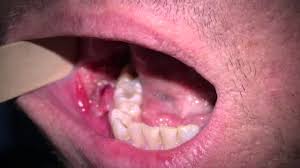
Why Mouth Cancer Is On The Rise

Scientists have beamed their search light on oral cancers, saying rates of mouth cancers have risen by 68 per cent over the past 20 years. These are contained in data, from Cancer Research UK, which also blamed unhealthy lifestyles for the trend.
According to the statistics, mouth cancer is on the rise for men and women of all ages. “From 1993 to 1995, there were eight cases of mouth cancer per 100,000 people, rising to 13 cases per 100,000 people between 2012 and 2014.” Mouth cancer, also known as oral cancer, is where a tumour develops in the lining of the mouth.
It may be on the surface of the tongue, the insides of the cheeks, the roof of the mouth (palate), or the lips or gums. Tumours can also develop in the glands that produce saliva, the tonsils at the back of the mouth, and the part of the throat connecting the mouth to the windpipe (pharynx). However, these are less common.
However, for men under 50, the rate has jumped by 67 per cent. Twenty years ago, there were around 340 cases per year in this age group, rising to around 640 now. For men aged 50 and over, rates have increased by 59 per cent.
There were around 2,100 cases a year, now there are 4,400. While mouth cancer is more common in men, women are also affected and have seen a 71 per cent rise in rates over the past 20 years.
Cancer Research UK issued a warning over the figures, saying nine out of 10 cases are linked to unhealthy lifestyles, reported the ‘independentuk’. Smokers have a particularly high risk, while drinking alcohol, having a diet low in fruits and vegetables, and infection with the Human Papilloma Virus (HPV) also play a part. Reacting to the development, Cancer Research UK’s senior health information manager, Jessica Kirby said:
“It’s worrying that oral cancer has become more common. It’s important to get to know your body and what’s normal for you, to help spot the disease as early as possible.
“An ulcer or sore in your mouth or tongue that won’t go away, a lump on your lip or in your mouth, a red or red and white patch in your mouth or an unexplained lump in your neck are all things to look out for.”

How To Identify Plastic Rice In Nigerian Market


As the yuletide draws nearer and nearer and with the ban on imported rice still in force in Nigeria, reports are currently going round about plastic rice being smuggled into the country from China. In this article, an expert nutritionist gives an insight on how to recognize these poisonous and unhealthy brands of rice.
How do i identify plastic Rice in Nigeria? I heard so much news about some fake rice which are actually plastic rice which are illegally smuggled into the Nigerian market as real and edible rice for people to buy during Xmas which is gradually approaching. Plastic rice or fake rice is toxic and its really bad to the health.

That is why am using this medium to pass the information to some of my friends and readers who are illegally recently living in Nigeria to be very careful on the type of rice they eat. I am warning other Nigerians who love to eat rice to be very careful of what they are eating and i recommend they test some of this rice before buying or selling during Xmas.


What is plastic rice? plastic rice is fake rice produced in some part of the world to replace the high cost of expensive edible rice. Plastic rice is poisonous to the body, it does not digest, it contains plastic materials like phenyl group and it may cause death when in excess in the body. Effect of eating plastic rice or fake rice is that it is indigestible, it’s a polymer product that could lead to cancer, it may cause appendicitis and death. So to identify this fake or rubber rice, use the information below:

1. Cut with teeth; one of the best way to easily identify a plastic rice is to use your teeth to manually cut a grain of the rice you are about to buy or eat. When you cut or break a grain, it will show clearly if the grain is actually real or plastic. Polished natural rice break easily but plastic rice don't break so easily because it contains a polymer product.

2. Grind with mortar; you can also easily recognize or identify fake or plastic rice by taking few quantities of the sample rice, put it in a mortar and grind it. Real polished rice are broken and grind easily with mortal while plastic rice is synthetic and cannot be easily be grind into powder. This method will expose the real rice from the plastic rice at this Xmas period when the demand for rice is high not only in Nigeria but all over the world.

3. Test with Fire; one of the properties of plastics is that it melts when heated or exposed to fire. This method can also be used to test if rice is fake and plastic rice. You can just take few grains, burn it for few seconds, and if it melts it shows it’s a plastic rice but if doesn't melt, it’s a good rice. Some rice can be so packaged that you won’t know its fake or plastic rice but when you perform the fire test, you will get to know the truth instantly. 

4. Water test; you can also identify the plastic rice which has been smuggled into the Nigerian market simply by performing simple water test on the sample rice. We all know that rice is a solid and goes down when put into a container of water but when you buy rice and after pouring the rice in water, and its floats on top of the water then such rice is a plastic rice which is fake rice but when the rice sinks down, it’s the real rice.

5. Too Cheap: One of the reasons some Nigerians fall for scam or plastic rice is because they are gullible and they needed to buy things that are too cheap. For instance, someone called me to come and buy raw rice at $50 when I knew the cheapest rice in the market at this time recession in Nigeria is sold for over $100 which seems to be extremely cheap. I quickly called the person that I am not interested in such even if it’s a wholesale price. The Xmas season is here and many people might fall for plastic rice at slash price. So, you need to be careful about buying rice that are too cheap and some which are fake.

In conclusion, the points listed above are ways to identify plastic rice right now in Nigeria. You can easily identify these rice through the outrageous price on it, testing with water to see if it will floats, testing with fire if it will burn and using your teeth to break it to know if the rice will break.