Bitters Can Help Boost Immune System

Medical experts in Yenagoa, Bayelsa, have said that bitters could boost the immune system and regulate stomach acidity.
However, the experts advised manufactures to improve on the hygienic of production of such drugs and herbs.
A News Agency of Nigeria (NAN) correspondent who visited some shops yesterday in Yenagoa gathered that bitters were selling and consumed in most public places of drinking in the city.
Some of them include Action Bitter, washing and setting, baby-Oku, Skerewu, man-power, Swedish, Yoyo, Iguedo’s Gogo Cleanser as well as Chinese and India bitters.
Dr Luck Onuegbu, a gynaecologist in Ovom Community Health Centre, Yenagoa Local Government Area of Bayelsa, said that intake of bitter has nutritional value and it could also enhance fertility.
“Bitters are good to human body but we must be careful of what are being sold in the market this days; I know some bitters like Swedish and Yoyo, but with the influx of the unbranded ones today is worrisome.
“There are too many of them in the market but I can still remember Iguedo’s Gogo Cleanser and Yoyo bitters, they are good to human body.
“The mixture can regulate stomach acidity and manage blood sugar; it can also enhance fertility as well as combating inexplicable infertility in both man and woman.
“There is need to improve hygiene for production across the country and I must urge consumers to be using those that have been approved by the NAFDAC,” Onuegbu said.
Mrs Margret Owei, a Nutritionist, said that bitters or aromatic could also aid digestion, reduce digestive discomfort and actually improve the daily function of the digestive system.
According to Ogene, the herbal mixtures help to feed the micro-bacteria that becomes healthy intestinal flora and taking after a meal is actually a little better but can also be taken before a meal.
Mr Ken Omeka-agu, a consumer of bitters, said it had helped his body system to be functional and agile.
Omeka-agu said that he was not consuming the mixture because they were cheap, but because it was African’s herb that had been used by our fore-fathers.
“You cannot take roots, especially `Agbo’, out of the system because it has been in use by our fore-fathers for ages that is why they lived long and strong.
“Most white man’s medication is made from herbs, so what is the big deal about herbs, or Agbo? Bitters, especially Agbo can cure a lot of illness, we want the state and federal governments to promote the use of African’s root,” he said.
Mrs Mercy Olufemi, an Agbo seller, said that some other bitters were Alomo and Kasapreko (from Republic of Ghana), Ibile, Opa Eyin and man power.
Olufemi said that these bitters were very suggestive for libidinal efficacy for both man and woman.
“There are different kinds of bitters that can improve libido and help a man to be active with his spouse; bitters or bitter tonic are spirit-based tinctures made from herbs, barks and roots.
“Bitters are prepared according to secret recipes by several manufacturers using bitter herbs, leaves, fruits, seeds or roots and sometimes alcohol or sugar.
“Yes, we sell it, Agbo in measures, a cup can be sold between N20, N50 and N100 depending on the mixtures and ailment,” she said.

Consumption of tiger nuts can prevent heart attack, constipation, diabetes – Expert nutritionist

A nutritional biochemist, Dr Ochuko Erukainure, last week Thursday said consumption of tiger nuts could prevent and help in the management of heart attack, constipation and diabetes.
Erukainure, a Senior Research Officer at the Federal Institute of Industrial Research (FIIRO), Oshodi, Lagos, said in an interview with the News Agency of Nigeria (NAN) in Lagos that the nuts contain high fibre.
He said that tiger nuts fibre helps the body by providing simple relief of constipation and also keeps the eater fuller longer and aids in weight loss.
Erukainure said that the fibre content was higher than other suggested sources of fibre such as oat bran, rice bran, peaches, cabbage, pears, apple, carrot and chia seeds.
Tiger nuts are not actually a nut, but a small tuber, which is high in fibre, protein and natural sugars.
Tiger nuts are very healthy which can help to prevent thrombosis and activate blood circulation and its very high fibre content combined with a delicious taste, make them ideal for healthy eating.
“Tiger nuts give a heating and drying action to the digestive system in general and this gives it the potency to alleviate flatulence,” he said.
According to him, tiger nuts are also high in calcium which is a bone building and growth supporting mineral.
He said that with only 100 grammes of tiger nuts, the body would get 13 to 17 per cent of daily recommended dose of magnesium.
“This mineral stays active in the body and participates in more than 300 biochemical reactions of our chemical.
“Tiger nuts are high in amino acids with arginine, while arginine has shown to aid in conditions that are caused or made worse by restricted blood vessels such as chest pain and erectile dysfunction.
“Tiger nuts are also rich in vitamin E and protect the eater from harmful free radicals which are responsible for the death of the body cells.
“Antioxidants help the body to protect itself from free radicals, molecules that have an unshared electron.
“The unshared electron can react with oxygen to form reactive oxygen species, which are damaging to our bodies.
“Vitamin E combined with high levels of oleic acid, two components of tiger nuts, has also been shown to reduce the risk of coronary heart disease,” the expert said.
He also said that the oil extracted from tiger nuts contains only 18 per cent saturated fat and 82 per cent unsaturated fats. (NAN)

HIV/AIDS: A New Approach anchored on treatment-as-prevention

As the world prepares to mark 2016 World AIDS Day, scientists have applauded a new treatment approach which would prevent HIV globally, saying that there is proof that the therapy could work.
The World Health Organisation (WHO) and the Joint United Nations Programme on HIV/AIDS plan to use the approach called ‘treatment as prevention’ to eliminate the global pandemic, which the WHO said will have occurred when only one person out of 1, 000 becomes infected each year.
The findings are published May 9 in the ‘Lancet Infectious Diseases.’
Also, a nearly two-decade analysis by researchers from University of California, Los Angeles (UCLA) and in Denmark, has yielded the first proof that the approach could work.
The human immunodeficiency virus is a lentivirus that causes HIV infection and over time acquired immunodeficiency syndrome.
HIV is a virus that gradually attacks the immune system, which is our body’s natural defence against illness. If a person becomes infected with HIV, they will find it harder to fight off infections and diseases.
The virus destroys a type of white blood cell called a T-helper cell and makes copies of itself inside them. T-helper cells are also referred to as CD4 cells. Reviewing Danish medical records, the researcher found that the treatment-as-prevention strategy has brought Denmark’s HIV epidemic to the brink of elimination.
The study found that in 2013, the country had only 1.4 new HIV infections per 1,000 men who have sex with men, Denmark’s major risk group.
“The Danes have done what nobody else in the world has been able to do,” said Sally Blower, the study’s senior author and the director of the Center for Biomedical Modeling at UCLA. “They have almost eliminated their HIV epidemic, and they have achieved this simply by providing treatment.”
The paper notes, how-ever, that the treatment programmes in Denmark are exceptional. “Treatment makes people less infectious,” said Justin Okano, the study’s lead author and a statistician in Blower’s research group.
“In Denmark, 98 per cent of patients take all of their HIV medications, which is why treatment as prevention has worked there. Unfortunately, adherence levels are nowhere near as high in other countries.”
According to the researchers, the findings are based on a sophisticated statistical analysis of data from the ongoing Danish HIV Cohort Study, which began in 1995.
That project, which tracks all Danish men who have sex with men, and who have been diagnosed with HIV, was established and is run by Jan Gerstoft and Niels Obel, clinicians and epidemiologists in Denmark, who also are co-authors of the new study.
A co-author of the study, Laurence Palk, said for the treatment-as-prevention approach to eliminate HIV epidemics throughout the world, all countries would need to emulate Denmark’s treatment programmes.
“Even in resource-rich countries, this would take a huge amount of money and effort,” she said. “The goal of elimination through treatment is aspirational, but Denmark has shown that at least, in resource-rich countries, it’s achievable.”

Why Mouth Cancer Is On The Rise

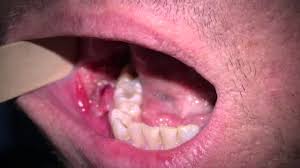
Scientists have beamed their search light on oral cancers, saying rates of mouth cancers have risen by 68 per cent over the past 20 years. These are contained in data, from Cancer Research UK, which also blamed unhealthy lifestyles for the trend.
According to the statistics, mouth cancer is on the rise for men and women of all ages. “From 1993 to 1995, there were eight cases of mouth cancer per 100,000 people, rising to 13 cases per 100,000 people between 2012 and 2014.” Mouth cancer, also known as oral cancer, is where a tumour develops in the lining of the mouth.
It may be on the surface of the tongue, the insides of the cheeks, the roof of the mouth (palate), or the lips or gums. Tumours can also develop in the glands that produce saliva, the tonsils at the back of the mouth, and the part of the throat connecting the mouth to the windpipe (pharynx). However, these are less common.
However, for men under 50, the rate has jumped by 67 per cent. Twenty years ago, there were around 340 cases per year in this age group, rising to around 640 now. For men aged 50 and over, rates have increased by 59 per cent.
There were around 2,100 cases a year, now there are 4,400. While mouth cancer is more common in men, women are also affected and have seen a 71 per cent rise in rates over the past 20 years.
Cancer Research UK issued a warning over the figures, saying nine out of 10 cases are linked to unhealthy lifestyles, reported the ‘independentuk’. Smokers have a particularly high risk, while drinking alcohol, having a diet low in fruits and vegetables, and infection with the Human Papilloma Virus (HPV) also play a part. Reacting to the development, Cancer Research UK’s senior health information manager, Jessica Kirby said:
“It’s worrying that oral cancer has become more common. It’s important to get to know your body and what’s normal for you, to help spot the disease as early as possible.
“An ulcer or sore in your mouth or tongue that won’t go away, a lump on your lip or in your mouth, a red or red and white patch in your mouth or an unexplained lump in your neck are all things to look out for.”

How To Identify Plastic Rice In Nigerian Market


As the yuletide draws nearer and nearer and with the ban on imported rice still in force in Nigeria, reports are currently going round about plastic rice being smuggled into the country from China. In this article, an expert nutritionist gives an insight on how to recognize these poisonous and unhealthy brands of rice.
How do i identify plastic Rice in Nigeria? I heard so much news about some fake rice which are actually plastic rice which are illegally smuggled into the Nigerian market as real and edible rice for people to buy during Xmas which is gradually approaching. Plastic rice or fake rice is toxic and its really bad to the health.

That is why am using this medium to pass the information to some of my friends and readers who are illegally recently living in Nigeria to be very careful on the type of rice they eat. I am warning other Nigerians who love to eat rice to be very careful of what they are eating and i recommend they test some of this rice before buying or selling during Xmas.


What is plastic rice? plastic rice is fake rice produced in some part of the world to replace the high cost of expensive edible rice. Plastic rice is poisonous to the body, it does not digest, it contains plastic materials like phenyl group and it may cause death when in excess in the body. Effect of eating plastic rice or fake rice is that it is indigestible, it’s a polymer product that could lead to cancer, it may cause appendicitis and death. So to identify this fake or rubber rice, use the information below:

1. Cut with teeth; one of the best way to easily identify a plastic rice is to use your teeth to manually cut a grain of the rice you are about to buy or eat. When you cut or break a grain, it will show clearly if the grain is actually real or plastic. Polished natural rice break easily but plastic rice don't break so easily because it contains a polymer product.

2. Grind with mortar; you can also easily recognize or identify fake or plastic rice by taking few quantities of the sample rice, put it in a mortar and grind it. Real polished rice are broken and grind easily with mortal while plastic rice is synthetic and cannot be easily be grind into powder. This method will expose the real rice from the plastic rice at this Xmas period when the demand for rice is high not only in Nigeria but all over the world.

3. Test with Fire; one of the properties of plastics is that it melts when heated or exposed to fire. This method can also be used to test if rice is fake and plastic rice. You can just take few grains, burn it for few seconds, and if it melts it shows it’s a plastic rice but if doesn't melt, it’s a good rice. Some rice can be so packaged that you won’t know its fake or plastic rice but when you perform the fire test, you will get to know the truth instantly. 

4. Water test; you can also identify the plastic rice which has been smuggled into the Nigerian market simply by performing simple water test on the sample rice. We all know that rice is a solid and goes down when put into a container of water but when you buy rice and after pouring the rice in water, and its floats on top of the water then such rice is a plastic rice which is fake rice but when the rice sinks down, it’s the real rice.

5. Too Cheap: One of the reasons some Nigerians fall for scam or plastic rice is because they are gullible and they needed to buy things that are too cheap. For instance, someone called me to come and buy raw rice at $50 when I knew the cheapest rice in the market at this time recession in Nigeria is sold for over $100 which seems to be extremely cheap. I quickly called the person that I am not interested in such even if it’s a wholesale price. The Xmas season is here and many people might fall for plastic rice at slash price. So, you need to be careful about buying rice that are too cheap and some which are fake.

In conclusion, the points listed above are ways to identify plastic rice right now in Nigeria. You can easily identify these rice through the outrageous price on it, testing with water to see if it will floats, testing with fire if it will burn and using your teeth to break it to know if the rice will break.

Lying On your Back When Heavily Prenant Can Lead To Stillbirth

Scientists have alerted the public on one of the factors driving child mortality, saying, heavily pregnant women who sleep on their backs could be at higher risk of having a still birth. These findings are published in the ‘Journal of Physiology’.
The study found that lying on the back leads unborn babies to adopt a more dormant or inactive state, possibly caused by receiving lower levels of oxygen. According to the study, “These lower oxygen levels cause the foetus to move “to a low oxygen consuming state”, while the baby’s heart rate is also affected”.
Hence, the study found that this sleeping position puts more stress on the unborn baby, causing it to reduce its oxygen intake and shedding more light on why some babies are lost late on in pregnancy. Still birth is typically defined as foetal death at or after 20 to 28 weeks of pregnancy.
It results in a baby born without signs of life. It was reported that earlier studies have shown the position mothers lie in affects their baby’s health but did not reveal how or why.
However, reacting to this development, Lead researcher in the new study, Professor Peter Stone, of the University of Auckland, New Zealand, said: “Our controlled study found that lying on your back can add extra stress to the baby, contributing to the risk of still birth.”
He noted that the risk is likely to be increased further in women with underlying health conditions. For the latest research, scientists examined 29 healthy pregnant women in the third trimester (the last three months of the pregnancy) and their unborn children.
All the women were between 35 and 38 weeks pregnant and were at low risk of complications. Each woman was asked to lie in one of four positions – lying flat, lying on their back but propped up by 30 degrees and lying on the left or right side – in a randomly allocated order.
She remained in each position with one pillow under her head for 30 minutes while researchers monitored heart rates and the activity level of the foetus. Researchers found that when women lay flat on their backs, it caused physiological stress to the baby.
In response, it switched to a sleep-like state of lower activity where it consumed less oxygen. Its heart rate was also affected. Babies in the womb were five times more likely to be in this state when mothers were lying flat than when they were lying on their left.
The study’s authors said: “Maternal position has a significant relationship with both foetal behavioural state as determined by features of foetal heart rate and its variability.
The supine position (lying face up) maybe disadvantageous for foetal well being and in compromised pregnancies may be a sufficient stressor to contribute to foetal demise.” All the women involved in the study went on to give birth to healthy babies.
Stone added: “We have only looked at the effect of maternal positions for a short period of time while the mother is awake. Further research is needed to see the effect of staying in certain maternal sleeping positions overnight.’
In its reaction, the Royal College of Midwives said the research showed “position is important” for women in their third trimester. Louise Silverton, the RCM’s director for midwifery, said:
‘We have known for a long time that blood pressure is reduced where a woman is lying on her back. Many women will say that they don’t lie on their backs as they feel “funny” when they do.
Women are advised not to sleep on their backs. Also, it is known that, when in labour, moving a woman to her left hand side may improve the foetal heart rate What this study shows that is different is, that even in the healthiest of women with a foetus with no known risk factors, position is important.

High Fat Diets Injurious To Young Brains

A new scientific evidence has emerged to show that an excess of fatty foods could affect the brain development of the young, potentially leading to cognitive defects later in life.
These findings are published in the journal ‘Molecular Psychiatry’. Carried out by a team of researchers from ETH Zurich and the University of Zurich, Switzerland, the study looked at the difference in brains of young and adult mice who consumed either normal food or an extremely high-fat diet, which contained excessively high levels of saturated fats, commonly found in fast foods, charcuterie products, butter and coconut oil.
A low-carb diet means you eat fewer carbohydrates and a higher proportion of fat. This is often called a lowcarb, high-fat diet (LCHF). Most importantly, you minimise your intake of sugar and starches.
It was reported that after a period of just four weeks, the study team observed the first signs of cognitive impairment in the young mice fed the highfat diet, which could be seen even before the mice had started to gain weight.
The same changes in the behaviour of mature mice that had been fed a highfat diet over an extended period were not seen, although they suffered from other health problems as their metabolic systems were severely disrupted and they became obese.
However, Urs Meyer, one of the study’s authors, pointed out that, “this does not rule out the possibility that a high-fat diet may also be harmful for the brains of adult mice.”
A person’s age when the fatty foods are consumed is particularly important as high-fat foods tend to have an even stronger negative impact on the maturation of the prefrontal cortex during the period of late childhood to early adulthood.
This part of the brain takes longer to mature than others, leaving it more vulnerable to negative environmental experiences such as stress, infections and trauma, and as seen in the study, possibly a poor diet.
As it is responsible for the executive functions of the human brain including memory, planning, attention, impulse control and social behaviour, if it not functioning correctly or damaged in any way, it can lead to cognitive deficits and personality changes such as a loss of inhibitions, aggressiveness, or childish or compulsive behaviour.

AIDS: Older Men Now At Risk Of Drug Resistance

The United Nations has issued a report revealing that older persons on AIDS treatment are developing resistance and requiring treatment for other illnesses such as tuberculosis, TB, and hepatitis.
This development was contained in a new report issued by UNAIDS yesterday, as part of activities to mark the 2016 World AIDS Day. Although, more than 18 million people now have access to life-saving AIDS treatment, 1.2 million more than at the end of last year, the UNAIDS stated: “As people with HIV grow older, they are at risk of developing longterm side-effects from HIV treatment, developing drug resistance and requiring treatment for other illnesses such as tuberculosis and Hepatitis C."
In the report on the AIDS pandemic, which has infected 78 million people and killed 35 million since it began in the 1980s, UNAIDS said the consistently strong scale-up of treatment has seen annual AIDS-related deaths drop by 45 per cent to 1.1 million in 2015 from a peak of about two million in 2005.
The report also cited data from South Africa showing that young women who become infected with HIV often catch the virus from older men. However, it said prevention was vital to ending the epidemic in young women and the cycle of HIV infection needs to be broken.
Reacting to the development, Executive Director of UNAIDS, Michel Sidibe said: “Young women are facing a triple threat. They  are at high risk of HIV infection, have low rates of HIV testing, and have poor adherence to treatment.” But, as more HIV-positive people live longer, the challenges of caring for them as they get older, of preventing the virus spreading and of reducing new infections are tough, UNAIDS said, even though drugs can reduce virus levels in a patient’s blood to near zero and significantly reduce the risk of passing it on.
“The progress we have made is remarkable, particularly around treatment, but it is also incredibly fragile,” said Sidibe.
With detailed data showing some of the many complexities of the HIV epidemic, the report found that people are particularly vulnerable to HIV at certain points in their lives. It called for “life-cycle” approach to offer help and prevention measures for everyone at every stage of life.
In 2015, there were 5.8 million people aged over 50 living with HIV – more than ever before. UNAIDS said that if treatment targets are reached – the U.N. is aiming to have 30 million HIV positive people on treatment by 2020 – that number will soar.

Why Men Die Earlier Than Women

An insight has been given as to why men die earlier than women. In their efforts to boost the life expectancy of men, scientists have found that working long hours and reducing hours of sleep in midlife may lead to poorer physical health in old age. This is the findings of a new study published in the journal ‘Age and Ageing’.
The quarter-century study of Finnish businessmen found those who worked more than 50 hours a week and slept less than 47 hours weekly when they were middle aged were in worse physical health as old men than peers who had healthier work and sleep habits when they were in their prime.
Reacting to the study, Lead Author, Mikaela Birgitta von Bonsdorff of the University of Jyvaskyla in Finland, said: “The results are in line with what we hypothesised but we were not sure if we would be able to detect these longterm associations."
The ‘NewsmaxHealth’ reported that the researchers used data from the Helsinki Businessmen Study to follow the health outcomes for more than 3,000 white men born between 1919 and 1934.
About 1,500 of the men had provided clinical characteristics of health, self-rated health, working hours and sleep duration in 1974 when they were in their mid to late 40s, on average, and completed health related quality of life surveys in the year 2000, when most were in their 60s and 70s.
During their working years, nearly half of the original group of men had what researchers considered normal working hours of less than 50 hours per week and 352 men worked more than 50 hours a week.
Similar proportions of men had normal sleep of at least 47 hours per week, versus shorter sleep totals. Researchers found that men with long work and short sleep or long work and normal sleep in midlife had poorer scores for physical functioning, vitality and general health than those with normal work and normal sleep.
Midlife smoking and self-rated poor health at that time explained some of the association with the results at older age, but not all.

How To Manage Blood Pressure Naturally

Worried at the high burden of High blood pressure, which affected more than one billion people worldwide in 2015, scientists have alerted the public on natural methods of tackling the condition.
Managing this condition naturally has become necessary considering the fact that high blood pressure is a silent killer. Many people don’t realize they have it until it’s too late. High blood pressure (HBP or hypertension) is when your blood pressure, the force of the blood flowing through your blood vessels, is consistently too high. A heart attack brought on by high blood pressure can occur without any warning signs or symptoms.
That’s why it’s important to learn about natural ways to lower blood pressure. According to a new study published in ‘The Lancet’, in a healthy person, blood pressure can rise and fall throughout the day. When blood pressure stays high for a long period of time, this leads to an increased risk of heart disease, stroke and heart attacks.
Majit Ezzati, a professor of global environmental health at Imperial College London, who led the analysis, said globally, blood pressure is a condition of poverty, not affluence.
Besides, in the high-income world blood pressure rates were coming down despite the ageing and increasing population, Ezzati said, adding, in the population in Asia, as the age goes up, the blood pressure tends to be higher.”
Among natural methods recommended to lower high blood pressure are: get moving; reducing salt intake; and adopting a diet that include more fruits and vegetables. Many of those who suffer from high blood pressure turn to medication, but this is simply an approach that doesn’t address the root of the problem.
“A much healthier alternative is to use diet and exercise to maintain normal blood pressure levels,” the study shows. Consistent exercise strengthens the heart and enables it to pump more blood with less effort.
When the heart works less, the pressure on the arteries decreases and blood pressure is lowered. It could take up to a few months of consistent exercise to bring blood pressure down to healthy levels.
However, you have got to keep exercising several days a week or blood pressure levels can shoot right back up. Exercise brings with it another perk that helps maintain a healthy heart and lower blood pressure — getting rid of excess weight. But just because you’re exercising doesn’t mean you can eat anything you want and not suffer the consequences.
A hearthealthy diet is just as important as exercise to avoid the dangers of high blood pressure.